Formaldehyde & Co.: When New Furniture and Paint Pollute Your Indoor Air
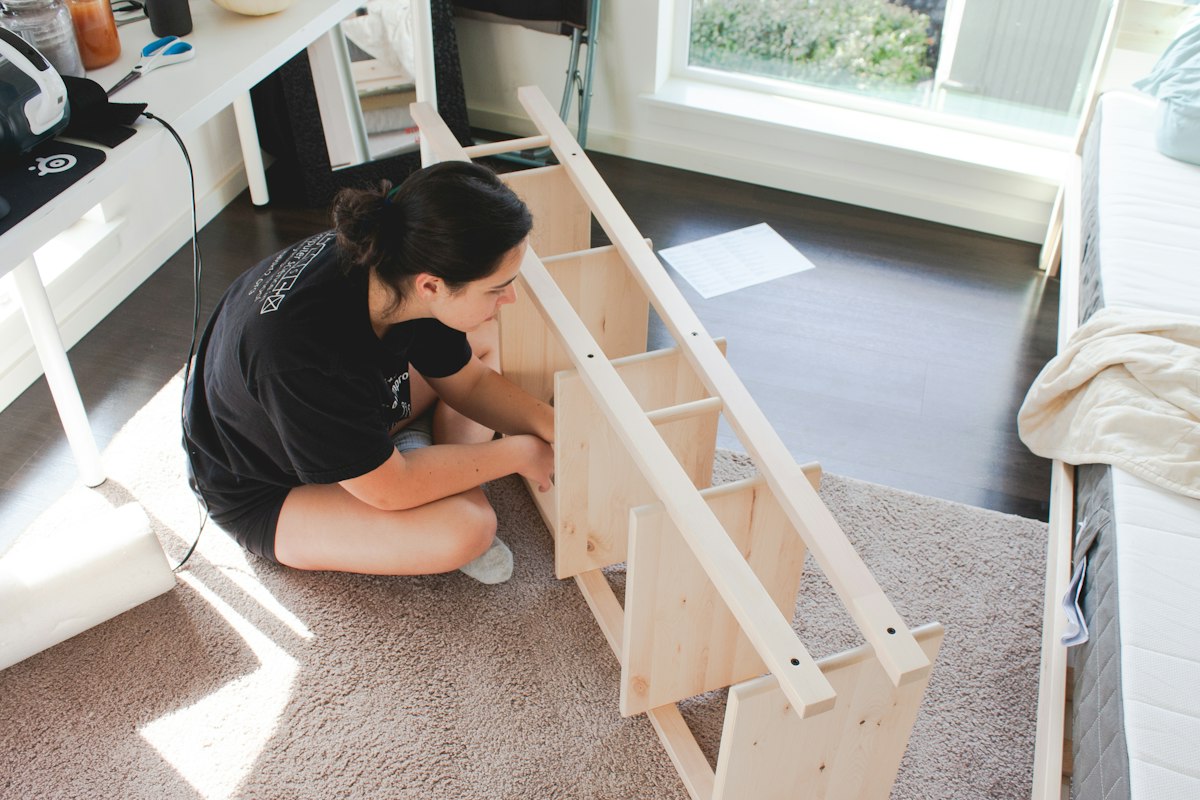
Everyone knows it: the smell of new furniture, fresh paint, a new car. What you’re smelling are volatile organic compounds (VOCs) — including the best-known troublemaker, formaldehyde, which can off-gas from glued wood products like particleboard and MDF.
What’s the problem?
Formaldehyde irritates eyes and airways even at low concentrations and is classified as a human carcinogen (nasopharynx, at high long-term exposures). Other VOCs — solvents from paints, lacquers, adhesives — cause headaches, fatigue, and mucous-membrane irritation in sensitive people. The typical pattern: symptoms at home, relief on vacation.
Context first: modern furniture and building materials are leagues better than the notorious particleboard of the 1970s and ’80s — the era that gave the U.S. its FEMA-trailer and UFFI-insulation formaldehyde scandals. And the strongest off-gassing fades by itself within the first weeks to months.
The classic sources
- New furniture made of composite wood (particleboard, MDF), especially large pieces like wardrobes and bed frames
- Freshly renovated rooms: paints, lacquers, adhesives, flooring
- Older fixed installations from the ’60s–’80s: paneling and built-ins glued with formaldehyde resins
- Laminate flooring and carpet adhesives, depending on the product
What actually helps
- Ventilate, ventilate, ventilate: in the first weeks after buying furniture or renovating, air out thoroughly several times a day — by far the most effective lever.
- Shop by label: in the U.S., composite wood must meet the TSCA Title VI / CARB Phase 2 formaldehyde standard — look for the compliance label; choose low-VOC paints (Green Seal, GREENGUARD certified products).
- Let new furniture off-gas: unpack immediately, ventilate the room intensively for the first days.
- For persistent symptoms: measure, don’t guess. An indoor-air test for formaldehyde and VOCs (lab-based kits from roughly $50–150, professional surveys from a few hundred) shows whether levels are actually elevated.
- Fix the source, don’t mask it: with contaminated older built-ins, only removal or proper sealing of the boards helps long-term — air fresheners just cover the problem.
If you spot suspects while house-hunting — say, wall-to-wall ’70s paneling — put them straight onto the pollutant checklist before signing.